A Mountain Range of Trout Water
Gin-clear torrents, glacial lakes, limestone canyons — and wild brown trout from the snowline to the olive groves.
The Pyrenees straddle France and Spain with four hundred kilometres of mountain trout water that varies from glacial high-altitude streams to warm, fertile foothill rivers that feel like a different continent from the peaks above. The French side — Ariège, Hautes-Pyrénées, Haute-Garonne — offers technical freestone fishing with the kind of regulated fly-only zones that make French trout fishing among the best-managed in Europe. The Spanish side — Aragón, Catalunya, Navarra — delivers trophy wild browns in extended autumn seasons that take advantage of the warm southern climate.
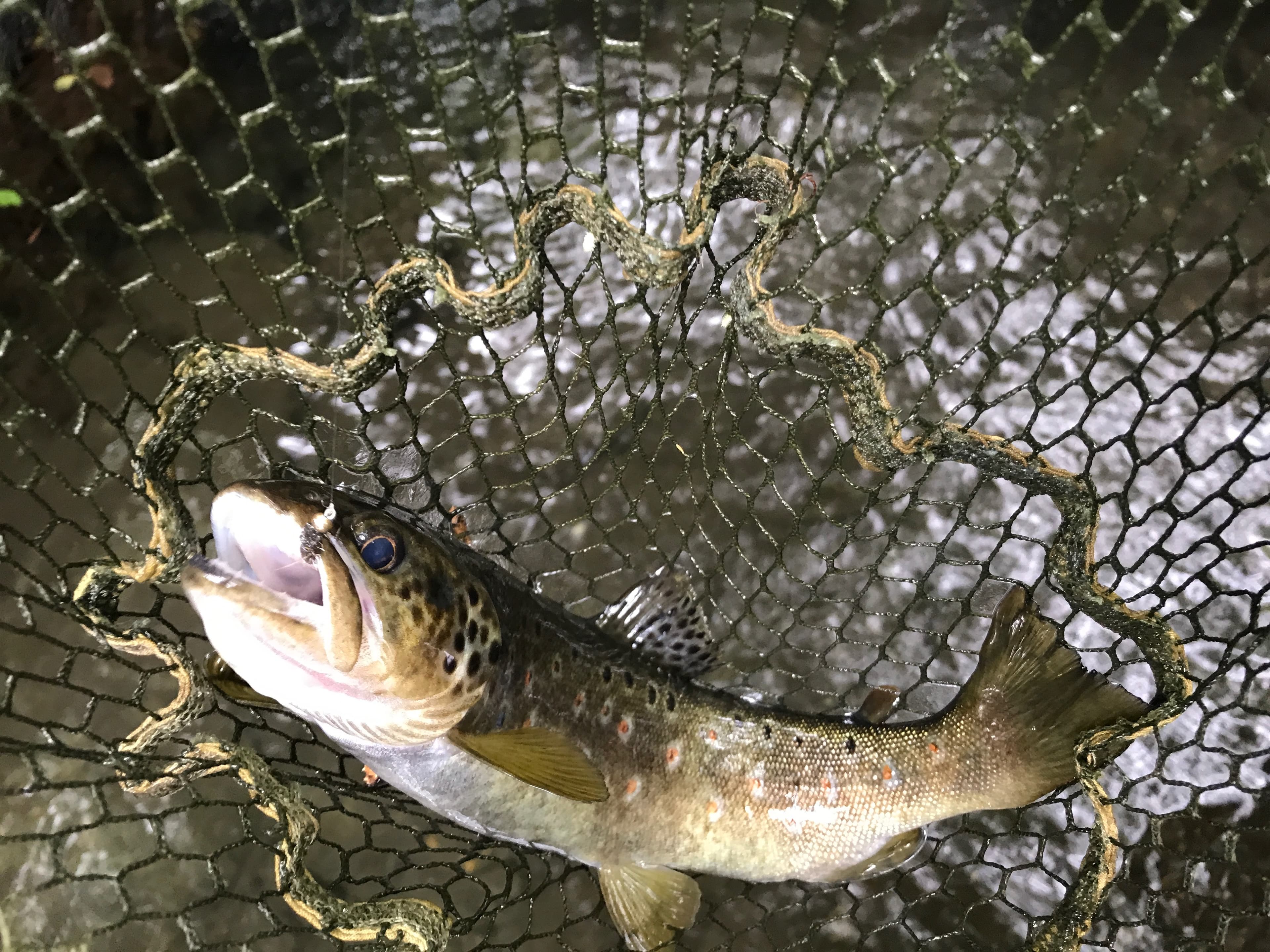
What makes the Pyrenees exceptional is the variety compressed into a small geographic area. In a single day, you can Euro-nymph a high-altitude torrent at two thousand metres for small, fierce browns, then drive down to a limestone foothill river and sight-fish to two-pound trout sipping olives in a glide. The hatches are strong — Rhithrogena, caddis, stoneflies, and terrestrials in summer — and the fish are wild. Not stocked-wild. Wild-wild. Native brown trout that have been in these rivers since the ice retreated.
For Asturian anglers, the western Pyrenees are a weekend trip. The Aragón, the Esca, the Irati — accessible from the Cantabrian coast, holding trout in water that differs markedly from the Sella and Narcea. The Pyrenees complement the home rivers rather than duplicating them.
French Pyrenees: Parcours and Precision
Fly-only catch-and-release zones on some of the finest freestone water in Europe — and a tourist card for twenty-seven euros.
The jewels of French Pyrenean fly fishing are the parcours no-kill — fly-only, catch-and-release zones managed specifically for wild trout. These regulated stretches, found on the Vicdessos, sections of the Ariège, the Salat, and other rivers, provide the conditions that wild brown trout need to reach their potential: no bait fishing, no kill, and the kind of insect-rich, well-oxygenated water that produces fish of genuine quality. Fishing a parcours is the closest thing mainland Europe offers to a well-managed British chalk stream — without the hundred-pound day ticket.
The rivers: the Garonne and its tributaries drain the central Pyrenees. The Ariège, flowing north through Tarascon-sur-Ariège, holds both Atlantic and Mediterranean lineage brown trout in water that ranges from fast mountain torrents to slower foothill pools. The Vicdessos is a tributary of the Ariège with excellent parcours no-kill sections. The Salat, the Neste du Louron, and the mountain lakes above the treeline (lacs d'altitude) complete the picture.
The season runs broadly from mid-March to mid-September on first-category (salmonid) waters, though dates vary by department. Tourist fishing cards are available online through the French federation system (cartedepeche.fr) — a two-week card costs around twelve euros, a season card around twenty-seven euros plus the federation supplement. The accessibility of French Pyrenean fly fishing, in both cost and regulation, is one of its greatest strengths.
French Methods: Euro Nymph and Dry
Euro nymphing through the pocket water, dry fly over the parcours glides. The method that was born here.
Euro nymphing — specifically the French leader technique — was essentially invented on Pyrenean rivers and the rivers of the French Massif Central. This is where tight-line, long-leader nymphing was perfected in competition. The method dominates on the mountain streams: a ten-foot four-weight rod, a fifteen-to-twenty-foot French-tapered leader with sighter section, and tungsten Perdigon or hare's ear nymphs bounced through pocket water and runs.
On the parcours glides and slower foothill pools, dry fly fishing is viable and rewarding from May through September. Gold-ribbed hare's ear and caddis pupa patterns fished on the French leader catch fish subsurface between hatches. When the Rhithrogena or olive hatches begin — typically midday to early afternoon on overcast spring days — a parachute olive or CDC emerger on a size sixteen covers the surface fishing.
High-altitude lakes (above two thousand metres) fish differently: terrestrial patterns — foam hoppers, beetles, ants — in July and August when the short mountain summer brings insects from the alpine meadows onto the water. The lakes hold small browns and, in some stocked waters, brook trout (introduced, not native). The fishing is simple, the setting is extraordinary, and the walk in is half the point.
Spanish Pyrenees: Trophy Browns and Extended Seasons
Wild browns in the Noguera Pallaresa, the Esera, the Gállego — and an autumn season that stretches into October when the rest of Europe has packed up.
The Spanish Pyrenees hold some of the finest wild brown trout water in southern Europe. The Noguera Pallaresa in Catalunya is arguably the best — crystal-clear limestone water, selective wild browns averaging a pound with fish to two or three, and the kind of technical fishing that demands precise presentation and correct fly choice. The Esera, flowing through the Benasque valley in Aragón, is classic mountain freestone: cold, fast, with native browns adapted to altitude. The Gállego above Biescas, the Aragón below Jaca, and the Esca in western Navarra round out the key waters.
The genuine advantage of the Spanish Pyrenees is the season. Warmer autumn temperatures keep fish feeding later than on northern European rivers — the general season in Aragón runs roughly from March through September, with some trophy zones extending into October. Autumn on the Spanish foothill rivers — September and October, with dropping water levels, warm afternoons, and big browns on hoppers in the glides — is the fishing that brings anglers back year after year.
Licensing varies by autonomous community. Aragón issues regional cards (around twenty to forty euros) and an intercommunity pass that covers multiple regions. Catalunya has its own system. Trophy zones (cotos de pesca, tramos sin muerte) may require additional permits. Check the specific regulations for each community before you travel — the rules differ and the fines for fishing without the correct licence are substantial.
Spanish Methods: Sight Fishing the Foothills
Perdigon and stonefly nymph in the torrents. Hopper and dry-dropper on the plains. Streamer through the deep pools.
Mountain torrents above a thousand metres: short-line Czech or Euro nymphing. Perdigon stonefly nymph on a size fourteen tungsten bead as the point fly, lighter hare's ear or pink-collar nymph on the dropper. Bounce the bottom through pocket water and plunge pools. The fish are small (six to twelve inches) but numerous and aggressive. An eleven-foot three-weight rod with a sighter leader covers the method.
Pre-Pyrenean foothill rivers below a thousand metres: sight fishing to individual trout in the glides and pools. Foam hoppers and dry-dropper rigs — a buoyant terrestrial on top with a small nymph trailing below. The browns in the lower rivers are larger (twelve to eighteen inches, occasionally more) and more selective. Approach from below, cast upstream, and drift the hopper through the feeding lane. The take on the surface is confident — a deliberate sip or a splashy grab depending on the fish's mood.
Deep pools on any river: small streamers stripped through holding water at dawn and dusk. Olive or brown zonkers, marabou leeches, and weighted nymph patterns fished on an intermediate line or a long sinking leader. The largest fish in the system hold in the deepest pools, and the streamer reaches them when the nymph cannot.
Pyrenean Hatches: Earlier Than the Alps
Atlantic weather on the western slopes, Mediterranean warmth on the eastern — the hatches start earlier and finish later than the main Alpine range.
The Pyrenees sit further south than the Alps and receive Atlantic weather influence on their western slopes, which produces a hatch calendar that starts earlier and extends later than the main Alpine range. Large Dark Olives appear in March on the lower French rivers and continue through April. Rhithrogena species peak in May on the mid-altitude streams — earlier than the Alpine Rhithrogena peak. Caddis diversity is excellent throughout the range, with evening sedge hatches from June through September that produce the best dry-fly fishing of the summer.
Stoneflies are significant in the fast headwaters — Perla and Dinocras species provide year-round nymphal food, with adult emergence from April through July depending on altitude. Terrestrials dominate from late June through September: beetles, ants, and grasshoppers from the alpine and sub-alpine meadows. On the Spanish foothill rivers, the hopper season extends into October — the warm autumn keeps both insects and fish active.
On the lower-altitude French and Spanish rivers, the autumn olive (Baetis rhodani autumn brood) provides reliable hatches from September through November — one of the last insects of the year and often the best dry-fly fishing. The Pyrenean hatch calendar, read alongside the Alpine Streams entomology playbook, gives the angler a complete picture of what to expect at each altitude and season.
Fishing by Altitude
High streams for Euro nymph, mid-altitude for mixed method, foothills for sight fishing and hoppers.
Above two thousand metres: high-altitude streams and glacial lakes. Euro nymphing with heavy beadhead nymphs through fast, cold pocket water. Small browns (six to ten inches) and, in some stocked lakes, brook trout. The season is compressed — July to September at these altitudes, with snowmelt floods through June. Terrestrials (beetles, ants) on the lakes when the wind blows from the meadows.
One thousand to two thousand metres: the heart of Pyrenean trout fishing. Mixed method — Euro nymph through the runs, dry fly when hatches appear, dry-dropper rigs in the glides. The Rhithrogena and caddis hatches are strongest at this altitude. Fish average eight to fourteen inches with larger specimens in the deeper pools. The parcours no-kill zones on the French side concentrate at this altitude.
Below one thousand metres: foothill rivers with the largest fish. Sight fishing to individual browns in clear, slower water. Hoppers and terrestrials on the surface, streamers through the pools, Euro nymph in the deeper runs. The Spanish foothill rivers (lower Noguera Pallaresa, lower Esera, lower Gállego) produce the trophy fish that define the autumn season.
Tackle: One Rod for the Range
A ten-foot four-weight covers everything from high-altitude pocket water to foothill sight fishing.
A ten-foot four-weight rod is the universal Pyrenean tool — long enough for Euro nymphing control, light enough for dry-fly delicacy on the foothill glides. A Euro nymph line or a standard weight-forward floater. A fifteen-to-twenty-foot French-tapered leader with sighter section for nymphing; a twelve-foot tapered leader for dry fly.
Flies: tungsten Perdigon in sizes fourteen to eighteen (the point fly that reaches the bottom), gold-ribbed hare's ear in sizes fourteen to sixteen, caddis pupa patterns, foam hoppers in size twelve for the foothill rivers, CDC olives and parachute emergers for the hatches. A small box of zonkers and marabou streamers for the deep pools. Twenty patterns cover the fishing across the full altitude range.
Wading gear matters more than on many European rivers — the Pyrenean streams are rocky, fast, and often require crossing. Felt-soled or studded wading boots for grip on limestone. A wading staff on the larger rivers. Sun protection at altitude is essential — the UV at two thousand metres is significantly stronger than at sea level.
Practical Logistics
Benasque for the Esera, Sort for the Noguera Pallaresa, Tarascon for the Ariège — and a weekend drive from Asturias.
The Pyrenees are a trip destination for most anglers, but the logistics are simpler than the Alps. The key bases: Benasque (Aragón) for the Esera and the high-altitude streams of the Maladeta massif. Sort and Rialp (Catalunya) for the Noguera Pallaresa. Jaca (Aragón) for the Gállego and the Aragón. Tarascon-sur-Ariège (France) for the Ariège and Vicdessos. All have accommodation ranging from mountain refuges to comfortable hotels, and all are within an hour of their respective rivers.
For Asturian anglers, the western Pyrenees are roughly four to five hours by car. The Irati and Esca rivers in Navarra are the closest, with the Aragonese rivers (Gállego, Aragón) accessible in a long day's drive. A long weekend trip — Friday evening to Sunday — covers two full days of fishing and is the format that most Spanish anglers use. The French side adds another hour or two but offers the parcours system that justifies the extra travel.
French licensing: the tourist card is available online through cartedepeche.fr — purchase before you arrive, as riverbank enforcement in France is efficient and the fines are real. Spanish licensing: each autonomous community has its own system. The Aragón intercommunity pass is the most practical option for anglers fishing across multiple regions. Check trophy-zone requirements separately.
Conservation: Native Lineages Under Pressure
Native Mediterranean and Atlantic brown trout lineages — genetically distinct, increasingly protected, and worth the care.
The Pyrenees hold genetically distinct native brown trout populations — Atlantic lineage on the western slopes (Navarra, western Aragón, French Atlantic drainage) and Mediterranean lineage on the eastern slopes (Catalunya, eastern Aragón, French Mediterranean drainage). These lineages are increasingly recognised as conservation priorities, and many rivers are now managed for native trout with rainbow trout stocking reduced or eliminated.
Catch and release is encouraged on most high-altitude streams and mandatory on the French parcours no-kill zones and Spanish tramos sin muerte. Barbless hooks are standard practice. The no-livebait rule applies on fly-only zones; on mixed-method waters, the traditional French toc (natural bait drifting) is still permitted in lower zones. Support the waters that prioritise native trout and fly-only management — they are the rivers that will produce the best fishing in ten years' time.
Your Pyrenees Day
High streams at dawn, foothill sight fishing at midday, evening rise on the parcours.
Dawn: start high. Euro nymph through the mountain streams while the water is cold and the fish are feeding close to the bottom. Heavy Perdigon on the point, lighter dropper above. Work upstream through the pocket water, covering each run systematically. The early fish are aggressive.
Late morning: descend to the mid-altitude water as the day warms. Switch to a lighter nymph rig or a dry-dropper setup as the hatches begin. Rhithrogena or olive hatches from midday on overcast days. Caddis pupae ascending through the runs. The mixed method — nymph between hatches, dry fly when fish show on the surface — covers the middle of the day.
Afternoon: the foothill rivers. Sight fishing to individual browns in the glides and pools. Foam hopper cast upstream of a visible fish, dead drift through the feeding lane. The afternoon terrestrial window — when beetles and hoppers tumble from the warm bankside meadows — is the prime time for the largest fish.
Evening: the parcours no-kill (France) or the tramo sin muerte (Spain). Evening sedge hatch on the water, fish rising freely, and the best dry-fly fishing of the day. An Elk Hair Caddis or a CDC emerger, fished upstream to rising trout in the fading light. The Pyrenees at dusk, with the peaks above and the river below, is as good a place to be as anywhere in European fly fishing.