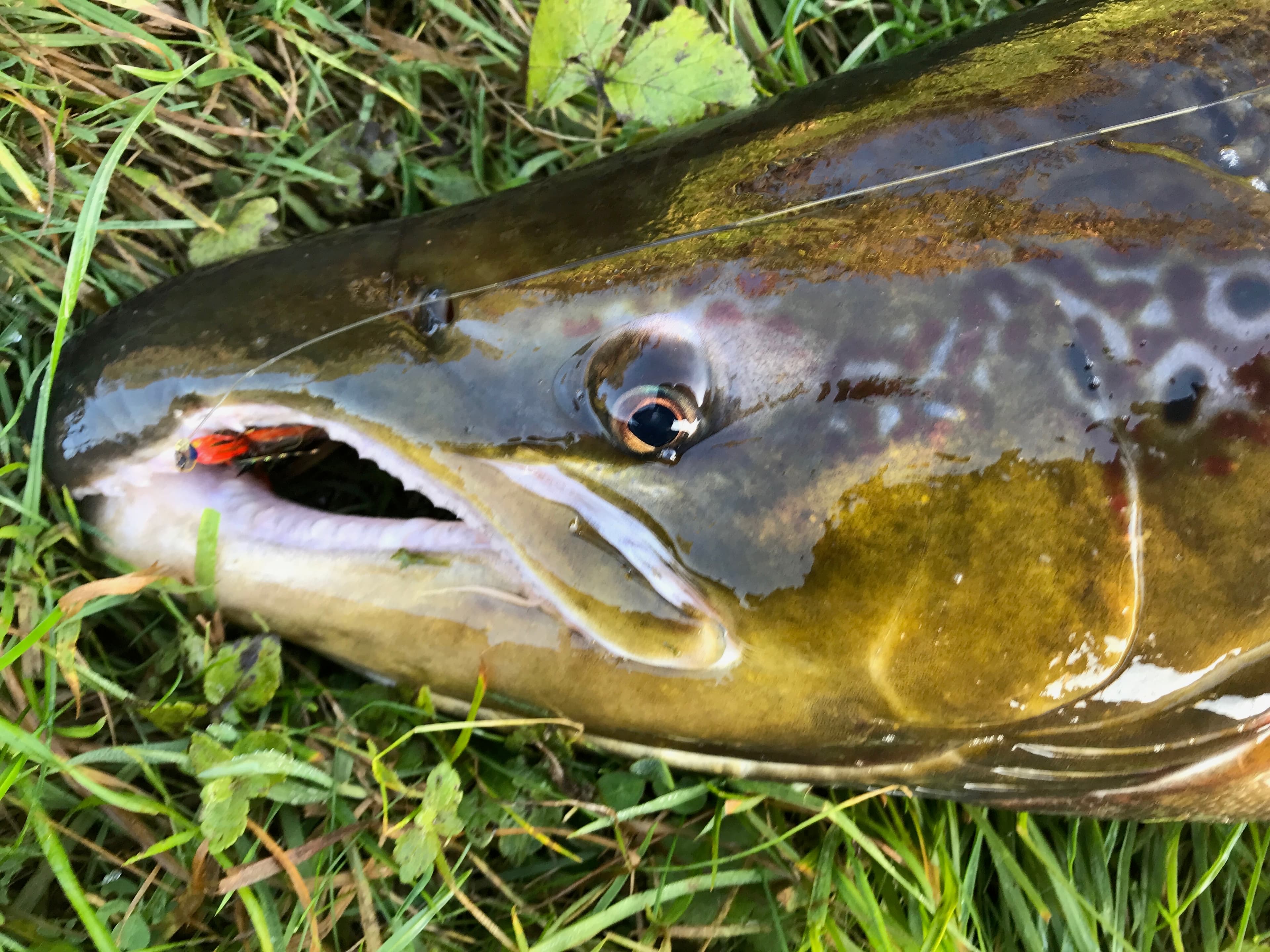
The Weight of Tradition
Scottish salmon fishing carries more tradition per square mile than any other branch of the sport. Some of it matters. Some of it is just tweed.
Scottish salmon fishing is the oldest continuous sporting tradition in fly fishing, and it shows — in the rituals, the language, the ghillie system, the beat rotation, and the particular reverence that attaches to a fresh-run fish in a Highland pool. The tradition runs from the Dee through the Spey, the Tay, the Tweed, and out to the small spate rivers of the west coast, and it carries with it a culture that has shaped how the entire world thinks about salmon fishing.
The ghillie's briefing at dawn, the methodical working of a pool from head to tail, the quiet conversation over lunch in the bothy, the single malt at the end of the day whether the fish came or not — these rituals are not affectation. They encode practical knowledge: how to share water, how to read conditions, how to approach a fish that may have been in the river for weeks and seen a hundred flies. The tradition belongs to the ghillies and the local anglers who maintain the river as much as to the famous names who fish it.
But tradition alone does not sustain a fishery. Scottish salmon are in crisis, and the sport is being reshaped by conservation regulations that would have been unimaginable a generation ago. Understanding that crisis — and the evolution that led to it — is as important as knowing how to cast a Spey line.
The Evolution of the Salmon Fly
From Victorian feather explosions to Megan Boyd's minimalism to modern UV tubes — the salmon fly tells the story of the sport.
The history of the salmon fly is a history of excess gradually stripped back to essentials. Victorian salmon flies were engineering projects — the Jock Scott alone required eight or more different feathers, married wings of exotic plumage, and the kind of time and skill that made each fly a small work of art. They were designed to impress the angler as much as the fish, and they caught salmon because, in an era of abundant stocks, almost anything cast into a pool would eventually connect.
The mid-twentieth century brought a revolution in simplicity. Hair-wing flies replaced married feathers. Tubes replaced single hooks — easier to tie, easier to change size, and crucially easier to release fish from, which would matter increasingly as conservation became central to the sport. The stoat's tail, the collie dog, the shrimp fly — patterns that worked by suggestion and movement rather than by baroque complexity.
The modern era has continued the trend towards function. Cone-head tubes, tungsten-bead flies, UV-reflective materials, and hot-spot trigger points — flies designed to provoke a response from salmon that are fewer, warier, and more pressured than at any time in the sport's history. The Sunray Shadow, skated across the surface on a summer evening, represents the end point of this evolution: a simple, effective pattern that catches salmon by triggering an instinctive response rather than imitating anything in particular.
Megan Boyd: The Brora Virtuoso
A cottage in Sutherland, a vice, and fifty years of tying flies that elevated the craft from function to art — and back to function again.
Megan Boyd tied salmon flies in a cottage near Brora, in Sutherland, for over fifty years. She tied classic fully-dressed patterns — Jock Scott, Silver Doctor, Thunder and Lightning, Blue Charm — with a precision and artistry that made her work sought after by anglers worldwide, from American collectors to European royalty. The film Kiss the Water captured something of her life and her dedication: a woman who never drove a car, never married, and devoted herself entirely to the craft of dressing feathers and silk on a hook.
What matters for the salmon angler is not the artistry of her full-dress flies — which were exhibition-grade and often too beautiful to fish — but her parallel output of effective fishing flies. Boyd tied functional tubes and low-water patterns with the same care she brought to the classics, and her understanding of what made a fly fish well — sparse hackle, clean profile, movement in the water — anticipated the minimalist trend that would dominate salmon fly design for the next half-century. Her principle was simple: a fly should look alive, not like a dissected bird.
Boyd received an MBE for services to fly tying but declined an invitation to Buckingham Palace — she could not leave her dog. That detail tells you everything about where her priorities lay. The craft was the thing. The river was the client. Everything else was decoration.
The Modern Salmon Fly Wardrobe
Three conditions, three fly sizes, and the tube system that makes it practical.
The modern salmon fly wardrobe is built around tubes in three sizes matched to three conditions. Low summer water: small tubes on size twelve to fourteen trebles — the Stoat's Tail, the Cascade, slim sparse patterns that present a minimal silhouette in clear water. Fish of any size will take a fly this small if the presentation is right.
Medium height, clearing after a rise: standard tubes on size eight to ten trebles — the Ally's Shrimp, the Munro Killer, patterns with enough colour and movement to be visible in water carrying a tint. This is the bread-and-butter condition on most Scottish rivers, and the fly that catches most salmon most of the time.
High water, spate conditions: large cone-head tubes on size six to eight trebles — the Collie Dog, the Willie Gunn, big dark patterns fished on sinking tips to hold depth in heavy flow. The fly must be seen through coloured water, and it must fish deep enough to reach salmon holding in the lies they use when the river is up.
The Sunray Shadow stands alone — a surface fly fished on a floating line, skated across the pool on summer evenings. It provokes takes from salmon that have refused everything else, and it produces the most dramatic rises in salmon fishing. Carry one regardless of conditions.
The Tightening Regulations
Mandatory catch and release, method restrictions, and tightening season limits — the regulatory landscape is changing fast.
Scottish salmon regulations have tightened significantly over the past two decades, and the direction of travel is clear: more restriction, more conservation, less kill. The angler who fishes Scottish salmon today operates under a framework that would have been unrecognisable in the nineteen nineties.
Season dates vary by river and district — there is no single opening date. The Tay opens on the fifteenth of January, the Dee and Tweed on the first of February. But increasingly, early-season fishing is catch-and-release only, protecting spring salmon that are the most vulnerable component of the stock. Many rivers now mandate catch and release for the entire season or for specific months — typically April through August on rivers with poor stock assessments.
Method restrictions have tightened in parallel. Bait fishing for salmon — prawns, shrimp, worms — is increasingly prohibited or restricted on many rivers, particularly in the Tay system. Fly-only regulations are expanding. Barbless hooks are mandatory on most beats, and tube flies have become the standard partly because they facilitate quick, clean release. Coastal netting has been effectively eliminated.
The practical impact for the fly angler: carry barbless tubes in a range of sizes, fish catch-and-release as standard practice regardless of what the specific beat permits, and check the regulations for each river before you travel. The rules change annually on many rivers, and a beat that permitted kill last year may be catch-and-release this year. The ghillie will know the current rules. Ask before you fish.
The Conservation Crisis
Stocks have declined significantly across the range. Marine survival, river degradation, and aquaculture — the threats are multiple and the fish are fewer.
The decline of Atlantic salmon in Scottish rivers is not a single story but an accumulation of pressures that have eroded stocks over half a century. The picture varies by catchment — some rivers have declined catastrophically, others maintain reasonable runs — but the overall trajectory is downward, and the causes are stubbornly resistant to simple solutions.
Marine survival is the primary driver. Salmon that leave Scottish rivers as smolts are returning from the ocean in smaller numbers than at any time in recorded history. The reasons are complex and not fully understood: changing ocean temperatures, altered prey distribution in the North Atlantic, and increasing predation at sea. These are problems that river management cannot fix.
In the rivers, habitat degradation — agricultural run-off, forestry drainage, water abstraction, poorly designed hydro schemes — reduces the productive capacity of spawning and nursery habitat. Aquaculture on the west coast produces sea lice that infest wild smolts migrating through coastal waters, adding mortality to an already stressed population. Predation by cormorants, goosanders, and seals has increased as competing pressures reduce salmon's ability to absorb natural losses.
The response has been regulatory tightening (catch and release, method restrictions, netting bans), river restoration (gravel cleaning, riparian planting, barrier removal), and advocacy against the aquaculture industry. Whether these measures are sufficient to reverse the decline remains an open question. What is certain is that the era of abundant Scottish salmon is over, and the sport must adapt to a reality where every fish matters.
What It Means for the Modern Angler
The salmon are fewer. The fishing is more regulated. The privilege of hooking one has never been greater.
The modern Scottish salmon angler fishes in a different world from the one that produced the Victorian fly-tying tradition or even the mid-century abundance that Megan Boyd's generation knew. The fish are fewer. The regulations are tighter. The cost of a beat on a prime river has not decreased in proportion to the catch — if anything, the scarcity has increased the value placed on each fish, and the experience of fishing for them.
What has not changed is the quality of the experience. A day on the Spey or the Dee, fishing a Megan-style sparse tube through a pool that has held salmon for centuries, with a ghillie who knows every lie and every current seam, is still one of the finest things you can do with a fly rod. The fish, when it comes — the pull, the leap, the singing reel — is worth more now precisely because it is rarer. Conservation is not the enemy of the sport. It is the condition for the sport's survival.
Fish catch and release. Use barbless hooks. Support the river trusts and conservation organisations. Oppose open-net aquaculture. And when you hook a salmon, fight it quickly on strong tackle, revive it thoroughly, and let it go. The tradition that Charles III and his predecessors inherited, that Megan Boyd served with her craft, and that the ghillies maintain with their daily labour on the river — that tradition depends on there being fish in the river. Everything else is commentary.
Further Reading
Books, films, and organisations for the angler who wants to understand the full picture.
On Megan Boyd: Kiss the Water (2013), Eric Steel's documentary film. The best account of her life and work.
On salmon fly history: the Flyfishers' Club and Kelvingrove Museum collections hold examples of Victorian and twentieth-century salmon flies that chart the evolution from excess to minimalism.
On conservation: the Atlantic Salmon Trust (atlanticsalmontrust.org) publishes research and advocacy on marine survival, river restoration, and the threats facing wild salmon. The Dee Board (riverdee.org), the Spey Fishery Board (speyfisheryboard.com), and the Tay District Salmon Fisheries Board maintain river-specific stock assessments and regulation updates.
On regulations: the Scottish Government's salmon conservation pages (gov.scot) publish annual updates on catch-and-release requirements, method restrictions, and season dates. Check before you travel — the rules change frequently.