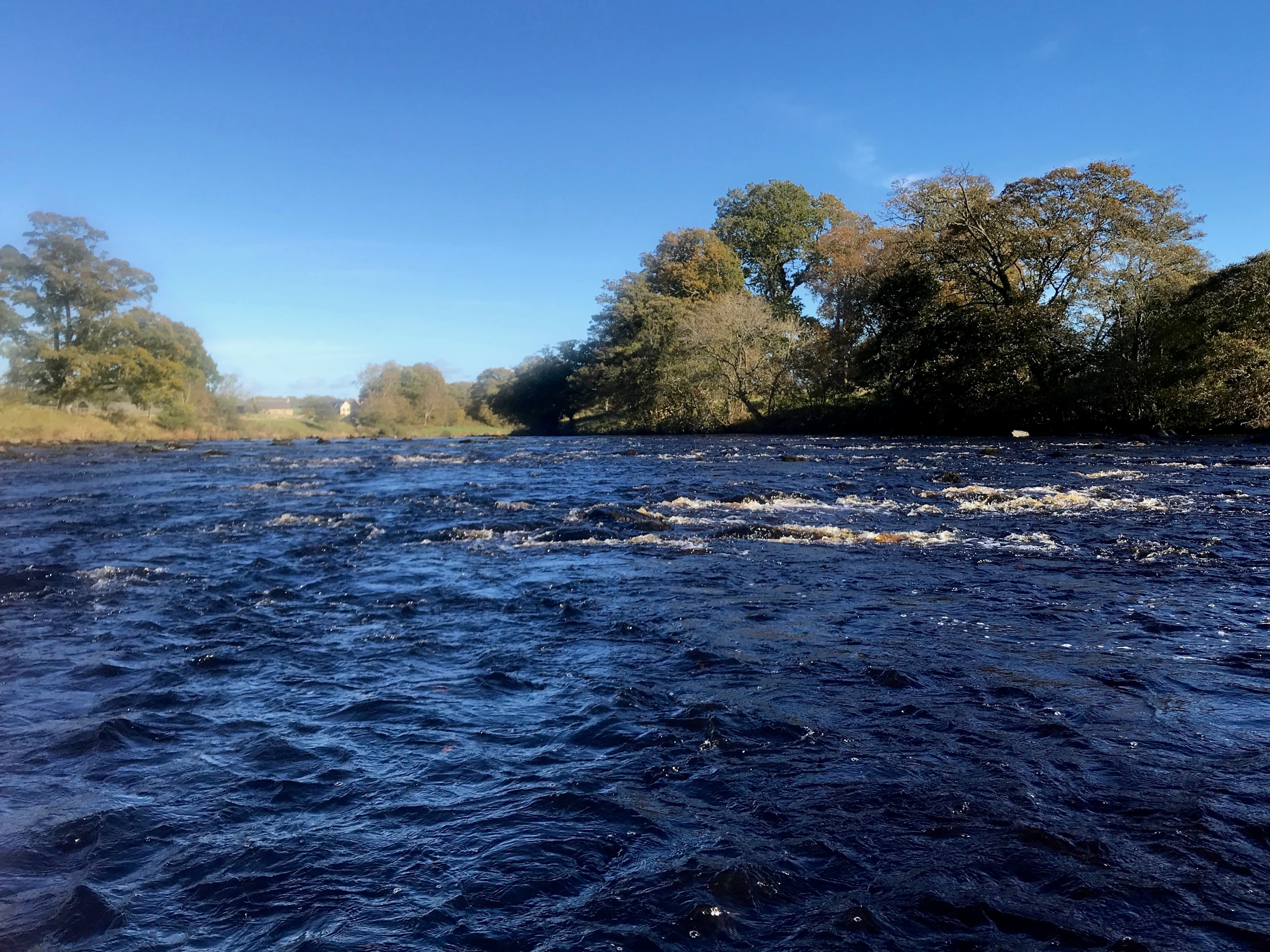
The Quarry and the Code
A twenty-pound silver torpedo that might leap ten feet or dive for the black hole. The fish demands composure. So does the tradition.
Atlantic salmon fishing carries a weight of tradition that no other branch of fly fishing quite matches — the tweed jackets, the single malt by the bothy fire, the quiet rituals of beats that have been fished for centuries on the Dee, the Tay, the Spey, the Tweed. It would be easy to dismiss this as affectation, and some of it probably is. But the core of it — the composure, the patience, the respect for a quarry that has travelled thousands of miles to return to the river of its birth — is not style. It is substance.
The Atlantic salmon does not feed in freshwater. This single fact governs everything. A taking salmon is not a hungry fish. It is a fish responding to stimuli we do not fully understand — aggression, reflex, territorial instinct, or some combination of all three. Your task is not to offer food but to provoke a response. Fly size, depth, speed of presentation, and the state of the water are your variables. Master them, and you will take salmon. Ignore them, and you will cast all day into beautiful water and catch nothing.
The code that surrounds salmon fishing — the etiquette, the rotation, the deference to the ghillie, the catch-and-release practice — exists because the fish is scarce and the river is shared. It is conservation dressed in tradition, and both are worth preserving.
The Arsenal: Purpose Before Fashion
A twelve-to-fifteen-foot double-handed Spey rod, a large-arbor reel, and the discipline to fish barbless.
Rod: twelve to fifteen feet, double-handed, rated eight to ten weight. The length provides the leverage for Spey casting across wide pools — the single Spey from the right bank, the double Spey from the left. An eleven-foot single-hander earns its place on tight beats where the trees crowd the back cast and the pools are narrow enough to cover without the reach of a long rod. Carbon fibre is the modern standard. The romance of bamboo is real, but the casting advantage of modern materials is decisive.
Line: Skagit or Scandi shooting heads matched to the rod. Skagit for sink tips when the fly must get down in heavy spring water. Scandi floating heads for summer and autumn, when the fly fishes closer to the surface and the presentation must be delicate. The line system is the engine of salmon fishing — get it wrong and neither the cast nor the presentation will function.
Reel: large arbor with a smooth click-check or disc drag. The reel must hold a hundred yards of backing behind the shooting head, and the drag must be reliable under the sustained pressure of a running fish. The sound of a salmon reel — that particular singing of line being taken against the check — matters more than specification sheets suggest.
Flies: tube flies in ten to twenty millimetres for most conditions — black and orange combinations, Sunray Shadows, Stoat's Tails. Up-eyed doubles on sizes six to ten for low water. The fly box should be organised by size and sink rate, not by name. Three to five patterns per condition is sufficient. Barbless tubes, knotless nets, wading staff. Leave nothing on the river but boot prints.
The Swing: Cover Water Like a Ghillie
Cast across at forty-five degrees, step down after each retrieve, let the fly quarter downstream in the hang. No frantic stripping — patience is the rod's true flex.
The swing is the foundation of salmon fly fishing and has been for as long as the method has existed. Cast across the current at forty-five degrees, allow the line to belly downstream, and let the fly swing across the pool in a controlled arc. At the end of the swing — the hang — hold the fly in the current for five to ten seconds before retrieving and stepping downstream two paces. Repeat. This is not exciting to watch. It is devastatingly effective.
Work each pool from top to bottom, methodically. The top third holds fresh runners — fish that have just entered the pool and are still charged with the energy of migration. Fish this water with a faster swing and smaller flies. The middle section holds resident fish that have been in the pool for days or weeks. Slow the swing, extend the hang, and fish with quiet persistence. The tail of the pool holds lying fish — salmon resting in the crease where the current accelerates over the lip. Shorten the line and fish the fly through the narrow band of taking water.
The cast sequence: single Spey from the right bank, double Spey from the left. The D-loop must form cleanly behind you before the forward stroke drives the line across the river. Practice on grass until the mechanics are automatic. Ghillies can spot a poor D-loop from two hundred yards, and they will form an opinion that lasts longer than the fishing day.
Retrieve: slow figure-of-eight or hand-twist. No stripping. The current does the work of presenting the fly, and your job is to maintain control without imposing speed. At the end of the swing, pause. Salmon frequently take a fly that has stopped moving — the moment of transition from swing to hang is when the fly changes direction, and that change provokes the response you are waiting for.
The Take: Don't Strike, Just Lift
Salmon grab and turn. Feel the rod load, lift smoothly to eleven o'clock. Striking pulls the hook.
The cardinal rule of salmon fishing: do not strike. A salmon does not sip a fly like a trout. It intercepts the fly on the swing, closes its mouth, and turns back to its lie. The take registers as a steady pull — sometimes savage, sometimes barely perceptible — and your response must be controlled. Feel the rod load under the weight of the fish, then lift smoothly to eleven o'clock. The hook sets itself in the scissors of the jaw. Striking — the reflex jerk that serves the trout angler — pulls the hook free from the angle that holds it.
A sharp pull from a fresh grilse: lift immediately. The fish has committed and turned, and any delay creates slack. A tap-tap from a resident hen salmon: wait for the turn. The fish is testing the fly, mouthing it without commitment. Let the line come tight before you respond. A boil behind the fly — a shadow chase that does not result in a take: shorten your line by a yard on the next cast and fish the same water again. The salmon has shown interest. A smaller fly, fished slower, through the same lie, will often produce the take that the first pass provoked but did not complete.
Fighting: Pressure Without Panic
Land the fish fresh, not exhausted. Three to ten minutes for a ten-to-twenty-pound salmon. Strong tackle saves gills.
The objective is to land the fish quickly and in good condition. Three to ten minutes for a ten-to-twenty-pound salmon. Longer than that and the fish accumulates lactic acid that compromises survival after release. Strong tackle is not aggression — it is welfare.
When the fish jumps, bow the rod towards it. Side pressure steers a running fish without the risk of high-sticking, which snaps rod tips and breaks tippets at the worst possible moment. Pump and wind: lower the rod to forty-five degrees, reel while lifting. Gain line on the downstroke, hold on the upstroke. Do not reel against a running fish — let the drag do its work.
Beach the fish sideways, guiding it tail-first towards the bank or into the net. The ghillie nets from downstream, scooping the fish headfirst into a knotless rubber mesh. Never lift a salmon vertically by the net — the weight on the backbone can cause injury that is invisible but fatal. Support the fish horizontally at all times.
Revive: hold the salmon upright in the current, facing upstream, for sixty to one hundred and twenty seconds. Wait for the strong, rhythmic tail-beat that signals recovery. Release when the fish pulls away from your hands with purpose. If the tail-beat is weak or erratic, continue holding. Patience in the final moments is as important as patience in the fishing.
Flies by Water and Mood
Low and clear: small shrimp. Spate: big tubes. Summer: skated Sunray. When in doubt, go smaller.
Fly selection for salmon follows the water, not the calendar. Low and clear conditions: small shrimp patterns on eight-to-twelve-millimetre tubes, fished on a floating line with a slow swing. The fly drifts naturally, the presentation is subtle, and the salmon — which can see everything in clear water — is less likely to be alarmed by a large, fast-moving object.
Spate conditions: big cone-head tubes and Stoat's Tails on twenty-millimetre tubes, fished on a sink tip to hold depth in the coloured, fast-moving water. Visibility is reduced, and the fly must be large enough and deep enough to register with a salmon that cannot see far. The swing can be faster — the fish are aggressive in fresh water and will chase a fly that demands a response.
Summer: the Sunray Shadow, skated across the surface on a floating line. This is the technique that produces the most dramatic takes in salmon fishing — the fish comes from depth to slash at a fly riding the surface film. It works on warm evenings when the water is low and the salmon are reluctant to chase a subsurface fly.
Bright conditions: dark flies. Black and orange combinations present a strong silhouette against the sky when viewed from below, which is how the salmon sees them. Carry three to five patterns per condition and rotate methodically through the box before changing the approach. When in doubt, go smaller. A salmon that refuses a large fly will sometimes take a smaller version of the same pattern fished through the same lie.
Reading Beats: Where Salmon Lie
Pots, glides, streaks, and slacks — the ghillie reads water that you cannot yet see. Trust the knowledge.
Salmon lies are not always obvious, and the ability to read them — to look at a pool and know where the fish are holding — is knowledge that takes years to acquire. This is why the ghillie exists. A good ghillie on the Spey or the Dee has fished the same beats for decades and knows every pot, every glide, every lie at every water height. Trust that knowledge. It is worth more than anything written here.
The pot: a deep scour hole with tail current where salmon rest after running hard water. Fish the tail of the pot where the current accelerates over the lip. The glide: even flow over gravel at four to six feet — the classic taking lie where salmon hold comfortably and respond to a well-presented fly. The streak: a fast crease between pools where salmon pause in transit. Brief holds, aggressive takes. The slack: dead water behind boulders where salmon rest out of the main current. Fish the edge of the slack where it meets the flow.
Watch for dippers working the oxygenated runs — the same lanes that hold invertebrates hold salmon. Note where the current concentrates against the far bank, where the depth changes colour, where the surface texture shifts from smooth to broken. The water tells you where the fish are if you learn to read the language. The ghillie is your translator.
Seasons and the Sporting Calendar
Spring for the big fish, summer for the grilse, autumn for the fresh multi-sea-winter salmon — each with its own character.
The salmon year has a rhythm that the angler learns to feel. March through May brings the springers — large multi-sea-winter fish, often fifteen to twenty-five pounds, that have entered the river through the winter and early spring. These are the most prized salmon, both for their size and for the quality of the fight. The water is cold and high, and the fly must fish deep — sink tips, large tubes, slow swings through the heavy pools.
June through August is grilse season. Smaller fish — five to eight pounds — that have spent a single winter at sea. They are fast, acrobatic, and take a fly with a conviction that belies their size. The water is low and warm, and the fishing shifts to floating lines, smaller flies, and the skated Sunray on summer evenings. This is the most accessible salmon fishing of the year.
September and October bring the fresh multi-sea-winter fish — the autumn run that many consider the finest fishing of the year. The fish are silver, strong, and willing. The water is often perfect: dropping after autumn rains, carrying enough colour to give the salmon confidence. Medium-sized tubes on intermediate tips, fished through the classic lies with the discipline that the method demands.
Water height matters more than the calendar. The ideal is six to twelve inches of colour above normal — what the ghillies call "a Scotch spade" — enough to give the fish confidence without obscuring the fly. Rising water brings fresh fish into the pools. Falling water after a spate is the finest taking time of all.
Etiquette: The Sporting Code
One rod per pool, yield to the ghillie, tip generously, and fish from dawn till dusk — unless the river says otherwise.
The etiquette of salmon fishing is not decoration. It is the system that allows multiple anglers to share a finite resource without conflict, and it works because everyone follows it. One rod per pool at a time. If someone is fishing a pool, wait until they have worked through it or offer to leapfrog to the next beat. Yield to the ghillie's direction — the ghillie knows the water, the rotation, and the protocol of the beat, and arguing about it is poor form and poor strategy.
Fish from dawn till dusk on most beats. Some rivers observe no Sunday fishing — a tradition that gives the fish a day of rest and the angler a day to recover from the previous week's efforts. Tip the ghillie fifty to a hundred pounds per day. This is not charity. It is the sporting tax that acknowledges the knowledge, the labour, and the companionship that a good ghillie provides. The bothy fire, the flask of tea at midday, the quiet conversation about water heights and taking times — these are part of the experience, and they are earned by the ghillie's work, not given freely.
The code is simple: fish honestly, handle fish carefully, respect the river and the people who work on it, and leave the beat in the condition you found it. Salmon fishing at its best is a collaboration between the angler, the ghillie, and the river. The fish, magnificent and indifferent, does not care about any of it. Which is part of the point.
Conservation: The Modern Obligation
Catch and release is not generosity. It is the minimum the fish deserves and the future requires.
Atlantic salmon populations have declined across their entire range. The causes are multiple — marine mortality, river degradation, aquaculture, climate change — and the solutions are complex. But one thing the angler can control is what happens to the fish at the end of the line.
Catch and release is mandatory on most rivers from June through August, and it should be voluntary practice throughout the season. Barbless hooks, rubber mesh nets, wet hands, minimal handling. Avoid fishing when water temperatures exceed twenty degrees — a salmon fought in warm water accumulates lactic acid faster and recovers more slowly, and the mortality rate rises sharply. Fight fish quickly on strong tackle. Fifteen minutes playing a salmon on a light rod is not sportsmanship. It is cruelty with an alibi.
Support the river trusts and conservation organisations that maintain habitat, monitor stocks, and oppose the threats that salmon face. The Dee Trust, the Tay Ghillies Association, the Atlantic Salmon Trust — these bodies do the work that preserves the fishing for the next generation. The salmon that leaps at your fly today is the product of a river system that has sustained it from egg to smolt to ocean and back. The least we can do is ensure the system continues to function.
Your Salmon Day
Dawn coffee, ghillie brief, top-pool shrimp swing. Midday: rotate flies, rest pools. Dusk: Sunray skated low.
Dawn: coffee with the ghillie. Discuss the water height, the overnight conditions, which pools fished well yesterday. The ghillie's brief is not small talk — it is intelligence. Listen to it. Rig for the conditions: sink tip and shrimp tube if the water is high, floating Scandi and small tube if it is low.
Morning: start at the top pool. Fish it methodically from head to tail, stepping down two paces between each cast. Cover every lie. If the pool is long, fish it in sections — top third, middle, tail — giving each section the time it deserves. A pool fished in a hurry is a pool not fished at all.
Midday: rotate flies. If the morning produced follows but no takes, drop a size. If nothing has moved, change the sink rate before changing the pattern. Rest the pools — salmon that have been disturbed by repeated casting need time to settle. Lunch in the bothy. The conversation matters. The tea matters. The river is not going anywhere.
Afternoon: fish the lower beats. The water may have changed — a rise from overnight rain, a drop from morning sunshine — and the adjustment may require a different line or a different fly. Fish with the same discipline as the morning. The salmon does not know what time it is.
Dusk: Sunray Shadow, skated low across the pool on a floating line. The light drops, the river quiets, and if a fish is going to take today, this is often the moment. The take, when it comes, is explosive — a slash from below that bends the rod to the cork. Lift. Do not strike. And afterwards, whether the fish came or not, a glass of malt by the bothy fire. Earned either way.