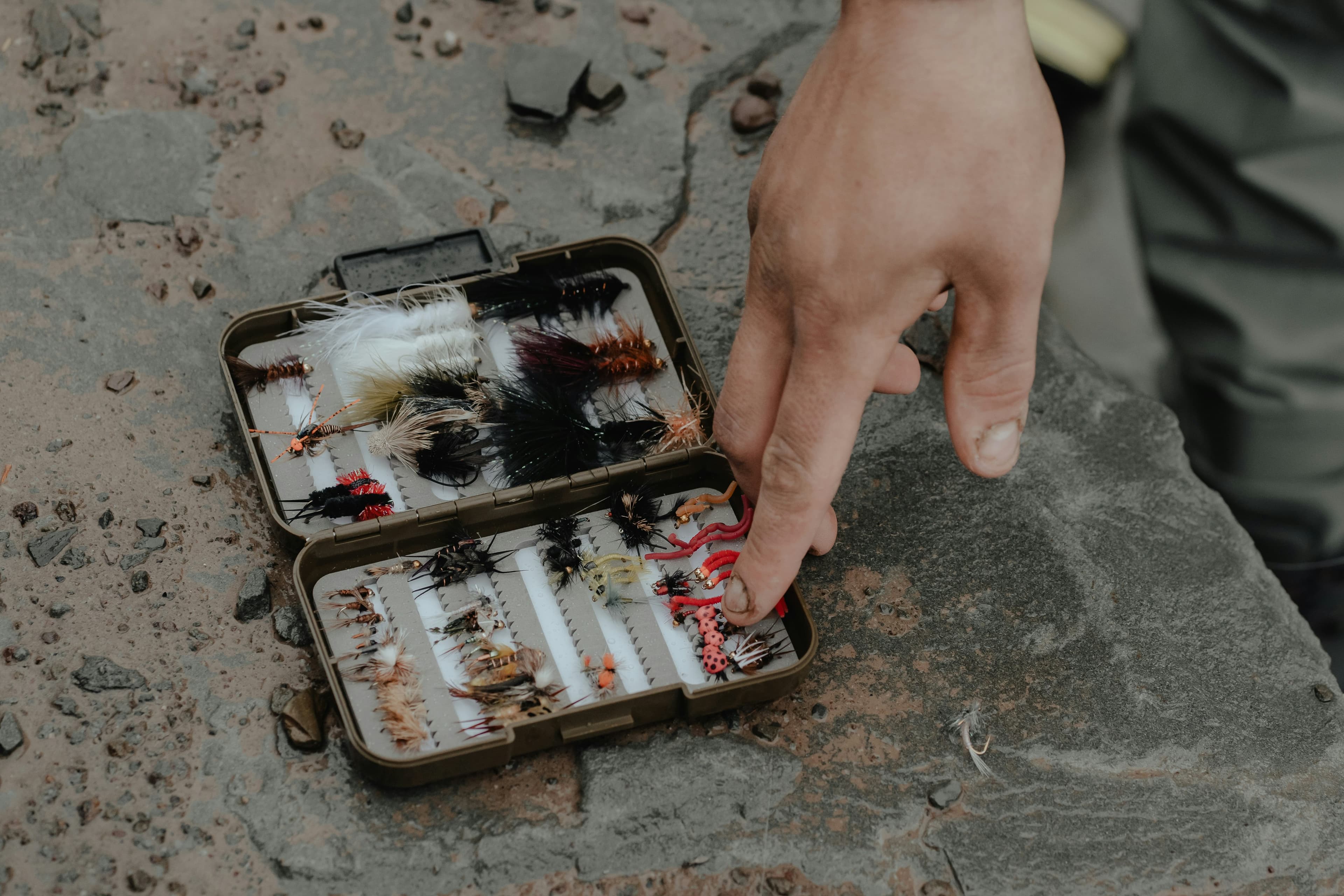
Why Reservoir Anglers Need Insect Intel
Stocked rainbows don't forget their biology. Stomach samples say sixty to eighty per cent insects — even on high-stock lakes.
There is a persistent myth in stillwater fishing that stocked rainbows eat lures and nothing else — that the fish are too stupid or too recently arrived to bother with insects. Stomach sampling tells a different story. Sixty to eighty per cent of the diet of stocked rainbow trout, even on heavily managed put-and-take fisheries, consists of natural invertebrates: chironomid larvae and pupae, freshwater shrimp, corixa, daphnia, damselfly nymphs, and whatever the wind blows onto the surface. The fish are not stupid. They are opportunistic, and the water is full of food that no stocking lorry delivered.
Matching the hatch is not a river angler's luxury. It is the difference between catching fish because you understand what they are eating and catching fish because one happened to swim into your lure. Both work. One works more often, more consistently, and with a precision that makes you a better angler on every water you visit.
What follows is the compact entomology that every stillwater angler needs: the food groups that drive trout behaviour, the seasonal calendar that governs when they appear, and the reading of surface activity that tells you what is happening below. It is not complicated. But it is the thing that separates the angler who blanks on a difficult day from the one who finds the buzzer depth and catches steadily until dark.
Chironomids (Buzzers and Midges) — The Year-Round Staple
Sixty per cent of the reservoir trout diet. Present every month. The foundation of stillwater fishing.
Chironomidae — the buzzers — are the single most important food group on any British reservoir. Stomach samples from Rutland, Grafham, and Chew consistently show chironomids accounting for sixty per cent or more of the diet. They are present year-round, though the significant hatches run from March through October with the strongest emergence between April and June when water temperature crosses the eight-to-fourteen-degree sweet spot.
The lifecycle matters because each stage demands a different approach. Red bloodworm larvae live in the lake bed — the winter staple, fished deep and slow on sinking lines. Pupae ascend through the water column to hatch at the surface, and this ascending phase is when trout feed most actively on buzzers — the classic indicator-nymphing or washing-line approach. Adults mate in swarms above the water; spent adults and egg-laying females collect in the surface film, especially in evening calm, and trout sip them like spent olives.
The trout tell you what stage they are eating. Fish holding four to eight feet down with no surface activity: pupa ascending — suspender buzzer or washing line fished static or inch-by-inch. Subtle sipping in the surface film, especially at dusk: spent adults — small CDC emergers or shipman's buzzers fished in the top inch. No movement at all in winter: bloodworm on the bottom — deep, slow, patient.
Daphnia (Water Fleas) — The Invisible Clouds
When trout cruise mid-water in bow waves and nothing is hatching, they are filtering daphnia. It explains half the blank days in summer.
Daphnia are the food group that most reservoir anglers have never heard of but encounter constantly. These tiny planktonic crustaceans form dense clouds in the mid-water column, especially from May through September, and trout cruise through them filtering food with a steady, rhythmic swimming pattern that produces bow waves but no surface rises. The angler who sees bow waves and thinks "corixa" or "fry" is often wrong. In summer, daphnia is the most likely explanation.
Matching daphnia directly is impractical — the organisms are too small to imitate. The tactical response is to fish at the depth where daphnia concentrate, using small, mobile patterns that intercept cruising fish. An intermediate line with a team of small nymphs — diawl bachs, small buzzers, or crunchers — fished at the depth where the bow waves are visible. The trout are not feeding selectively on individual items. They are swimming through clouds of food, and a fly in the right zone will be taken as part of the general intake.
Damselfly Nymphs — The Shore-Bound Migration
May through July, nymphs swim from weed beds to shore to emerge. Rainbow trout intercept them with aggression.
The damselfly nymph migration is one of the defining events of the reservoir season. From May through July, mature nymphs leave the weed beds and swim towards the shore to emerge as adults. They swim with a distinctive undulating motion — slow, vulnerable, and highly visible to every trout in the lake. Rainbow trout intercept them aggressively, chasing individual nymphs through the shallows with a commitment that produces bow waves, splashy takes, and the most exciting bank fishing of the summer.
Fish a damsel nymph pattern — olive marabou, long-shank hook, size ten or twelve — on an intermediate line with a steady strip-pause retrieve along the margins and weed edges. The strip imitates the swimming nymph; the pause imitates the rest between bursts. Takes come on the pause more often than on the strip. The migration peaks in June on most reservoirs, and the bank angler who positions on the downwind shore where nymphs are swimming towards land has a significant advantage.
Corixa (Water Boatmen) — Year-Round Shuttles
Hemiptera, not crustaceans — air-breathing bugs that swim up and down the water column all year.
Corixa are true bugs — order Hemiptera, family Corixidae — not crustaceans, despite what some angling literature claims. They breathe air, carrying a silvery bubble beneath their wing cases, and shuttle between the lake bed and the surface throughout the year. This constant vertical movement makes them available to trout at every depth, and stomach samples show them as a consistent presence in the diet from January through December.
They are most visible to anglers in summer when wind concentrates them in surface lanes, but they are a significant winter food source as well — one of the few mobile invertebrates active in cold water. Trout feeding on corixa typically show as subsurface interception: a subtle bulge rather than a bow wave, positioned mid-water, picking off individual bugs as they swim. A pearl or black cruncher on a size ten or twelve, fished on an intermediate line with a slow figure-of-eight retrieve, covers the method.
Freshwater Shrimp, Hoglice, and Snails — The Constant Background
Year-round food on any reservoir with alkaline water and weed. The calories that keep trout alive between hatches.
Freshwater shrimp (Gammarus pulex) and hoglice (Asellus aquaticus) are crustacean scavengers that inhabit weed beds and silty margins year-round. They are not seasonal — they are the constant background food that trout eat between hatches, before hatches, and when nothing else is happening. Spring weed growth and autumn weed die-off expose more of them, creating seasonal peaks, but the baseline is always there.
Trout cruising two to five feet over weed beds, nosing into the vegetation with slow, purposeful movements, are almost certainly feeding on shrimp and hoglice. An olive shrimp or cruncher pattern fished on a floating line with a long leader, worked slowly over the weed tops, matches the situation.
Snails — Lymnaea and Planorbis species — are the overlooked reservoir food group. In summer, snails migrate to the surface on mucus rafts, and the "snail rise" — trout cruising just subsurface, taking floating snails — is a distinctive phenomenon that baffles anglers who do not recognise it. The fish show as slow, porpoising movements with no obvious insect activity. A small black or brown pattern fished static in the film, or a buoyant snail imitation, solves the puzzle.
Terrestrials and Fry — Seasonal Windfalls
Summer brings beetles and daddies on the wind. Autumn brings fry-feeding along the dam walls.
Terrestrial insects are the summer windfall — beetles, ants, hawthorn flies, and daddy longlegs blown onto the water from bankside vegetation and grassland. They arrive unpredictably but the effect is immediate: explosive surface takes near the windward bank, where wind concentrates the food and the trout wait like commuters at a sandwich shop. June through September, a foam daddy or a black beetle on a size ten to fourteen, fished with short casts to the margins, produces when nothing aquatic is hatching.
Fry feeding is the autumn transition. From August onwards, overwintered browns and larger rainbows switch to predatory feeding, smashing through shoals of sticklebacks and roach fry along dam walls and in the shallows. The rise form is distinctive — slashing attacks that spray water, or bow waves as trout herd fry against the bank. Floating fry patterns, minky lures, and small fish imitations fished on an intermediate line cover the method. This is the fishing that carries the reservoir season from September through to the end.
The Reservoir Year: Month by Month
Buzzer foundation from March to October, with damsel, daphnia, fry, and terrestrial peaks layered on top.
March and April: season opens. Bloodworm and early buzzer pupae in the six-to-twelve-foot zone. Shrimp and hoglice over weed edges. Slow retrieve, deep. Fish are cold and adjusting. Red midge larva on the point, olive shrimp on a dropper.
May and June: the peak. Buzzer hatches intensify — the strongest emergence of the year. Damselfly nymph migration begins late May and peaks in June. Daphnia clouds form in the mid-water. This is when the reservoir is richest: multiple food groups active simultaneously, fish feeding at every depth. Washing line buzzer rigs, damsel nymphs on intermediates, indicator-nymphed buzzers at varying depths.
July and August: summer heat pushes fish deeper by day. Daphnia feeding mid-water. Terrestrials on the windward bank — beetles, ants, daddies from late August. Evening sedge hatches produce surface feeding at dusk. Fry feeding begins in August as the autumn transition starts. Dawn and dusk are the productive windows; midday is deep and slow.
September and October: the great convergence. Fry feeding intensifies along dam walls. Buzzer hatches continue but thin. Spent adults collect in the film on calm evenings — small CDC emergers and static buzzers. Weed die-off flushes shrimp and corixa into open water. The fishing has an urgency: multiple food groups active, trout feeding hard before winter.
Reading Trout Activity: What the Surface Tells You
The surface is the trout's telegraph. Learn to read it and you know what is happening in the water column beneath.
No rises, no bow waves, dead flat water: bloodworm or deep chironomid feeding in winter. Heavy nymphs on a sinking line, slow and patient. The fish are there — they are just doing everything on the bottom.
Subtle sipping in the film, tiny dimples: buzzer pupae in the surface or spent adults collecting at dusk. Suspender buzzer five feet down, or a small CDC emerger fished static in the top inch. Do not cast over these fish — they are feeding delicately and will spook at the splash of a fly line.
Bow waves mid-water, steady cruising pattern: daphnia clouds or corixa. Intermediate line, small nymphs at the cruising depth. Match the depth, not the insect — the fish are filtering, not selecting.
Aggressive splashy takes near the windward bank: terrestrials — beetles, daddies, ants blown onto the surface. Foam terrestrial, short cast, margins only. This is the most visual and the most fun.
Slashing attacks, spray, herding behaviour near structure or dam walls: fry feeding. Switch to lures — floating fry, minky, small fish imitation on an intermediate. Strip fast, pause, strip. The predatory trout are not subtle.
Wind-lane rises, concentrated in a narrow band: trapped insects in the surface film — spent buzzers, small terrestrials, miscellaneous drift. Fish the lane with small emergers or static buzzers. Wind lanes concentrate food and fish in predictable, fishable zones — eighty per cent of summer surface takes happen in wind lanes.
The Myths That Cost You Fish
Stockies eat lures only. No hatches on reservoirs. Surface activity means dry flies. All wrong.
The myth that stocked rainbows eat lures only is comforting because it simplifies the fishing and flatters the lure angler. Stomach samples say otherwise: sixty to eighty per cent insects, even on heavily stocked lakes. The fish eat what is available, and what is available is overwhelmingly natural food. Lures work — nobody denies that — but the angler who matches the natural food catches more fish on more days.
The myth that reservoirs have no hatches is equally persistent and equally wrong. Micro-hatches occur daily from March through October. Buzzers emerge whenever the water temperature exceeds eight degrees, which on most English reservoirs means mid-morning through mid-afternoon for six months of the year. The hatches are not spectacular like a mayfly blizzard on Corrib — they are steady, constant, and the trout respond to them all day.
The myth that surface activity means dry flies ignores the reality of film feeding. Trout taking spent buzzers in the surface film, or intercepting ascending pupae an inch below it, look like dry-fly risers but are not. A dry fly sitting on top of the water misses the zone entirely. An emerger fished in the film, or a static buzzer just below it, is what the fish are actually eating. Watch closely. The difference between a fish taking a dun and a fish taking a pupa is the difference between a clean sip and a subtle bulge — and the correct pattern for each is entirely different.
The Reservoir Team: Covering the Water Column
Point deep, middle mid-water, bob near the surface. Change the depth before you change the fly.
The general-purpose three-fly team covers the water column systematically. Point fly at the bottom: red bloodworm or olive shrimp on a size twelve — the deep food that is always available. Middle dropper at mid-water: black buzzer pupa on a size fourteen — the ascending stage that trout intercept most actively. Bob dropper near the surface: pearl cruncher or small terrestrial on a size twelve — the surface-zone fly that catches fish feeding high.
Lines: floating for terrestrial and film feeding, intermediate for the four-to-eight-foot zone where most reservoir feeding happens, slow sink for deeper winter work. Change the line to change the depth band, not the fly pattern. A buzzer at six feet catching nothing will not catch more at six feet on a different pattern. The same buzzer dropped to ten feet may solve the problem entirely.
This team covers sixty to seventy per cent of situations. For the remainder: a damsel nymph on an intermediate for the May–July migration, a floating fry on a slow sink for autumn fry feeding, a daphnia-depth indicator rig for summer mid-water cruisers. No single team covers everything, but the three-fly rig is where you start, and where you return when nothing else is working.