A Species Apart
Not a brown trout variant. A distinct species — the largest salmonid in the Adriatic drainage, identified by sinuous marble markings and the absence of red spots.
The marble trout is one of those fish that changes the way you think about European fly fishing. Standing on the bank of the Soča, watching a four-pound marmoratus materialise from the emerald-green water — that distinctive sinuous marbling, no red spots, a body built for ambush — you understand that this is not a brown trout in a different colour. It is a different animal, adapted to a different niche, hunting with a different strategy.
Salmo marmoratus is genetically distinct from Salmo trutta — a separate species, not a subspecies or colour variant. It is found only in the Adriatic drainage: the Soča and its tributaries in Slovenia, the Adige, Tagliamento, and Po left-bank tributaries in northern Italy, and scattered populations in the Neretva (Bosnia) and Morača (Montenegro). It is the largest salmonid in its range — specimens exceeding twenty-five pounds have been recorded, though fish of five to ten pounds are realistic targets on the fly.
Fewer than a dozen genetically pure populations remain. Hybridisation with introduced brown trout has erased the genetic integrity of most historic populations. What survives is the focus of intensive conservation effort — and the fishing, where it is permitted, is among the most regulated and most rewarding in Europe.
Biology: The Size-Dependent Predator
Below three pounds, an insectivore. Above four pounds, a fish-eater. The diet shifts with size, and the method must follow.
The feeding biology of marble trout is size-dependent, and understanding this governs fly selection. Fish below three to four pounds feed primarily on the same invertebrates as brown trout: stonefly nymphs (Perla, Dinocras), caseless caddis larvae (Rhyacophila), and mayfly nymphs (Baetis, Rhithrogena). The EPT community of fast Alpine streams is their food base, and a heavy Euro nymph rig catches these fish with the same methods that work for brown trout and grayling in the same water.
Above three to four pounds, the diet shifts progressively towards fish. Sculpin (Cottus gobio), minnows, and juvenile trout become the primary food. The largest marble trout are apex predators — ambush hunters that hold in deep scours, under limestone ledges, and in the tail currents of deep pools, exploding from cover to intercept passing prey. Stomach contents of large specimens are dominated by small fish.
Thermal preference: eight to sixteen degrees, overlapping with brown trout but shifted slightly cooler. The upper Soča sections remain cold through summer (eight to twelve degrees), but the lower sections where the largest fish hold can reach sixteen to eighteen degrees. Marble trout are strictly freshwater — there is no anadromous behaviour. They are creatures of cold, fast, rocky headwaters in the Adriatic drainage, and that is where they remain.
Habitat: Where Marble Trout Hold
Deep scours, undercut limestone, the tail currents of cold pools — ambush lies where prey funnels and escape routes are short.
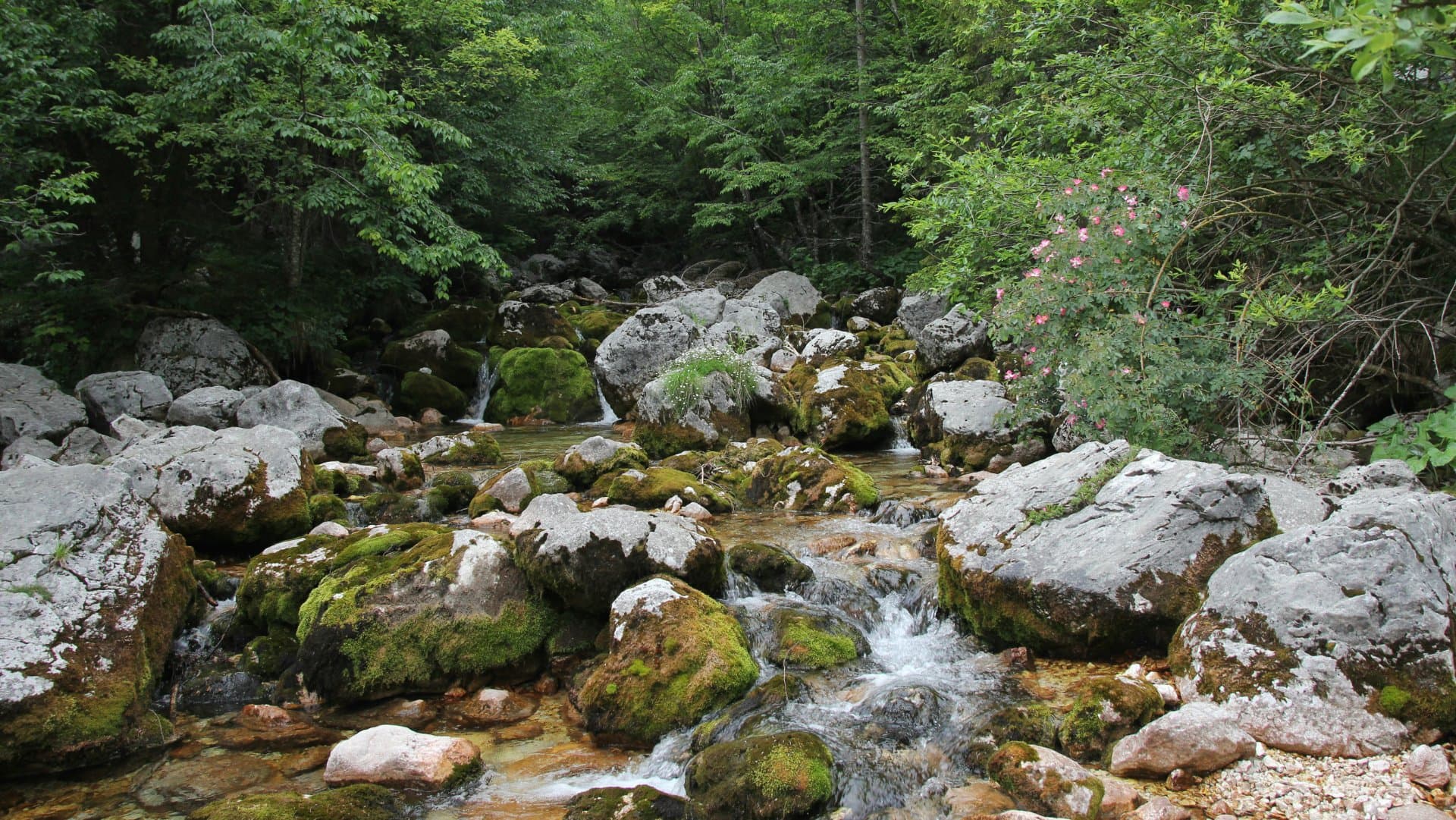
Marble trout habitat is defined by three requirements: cold, well-oxygenated water; rocky substrate with deep structure; and access to prey. The deep scour holes of the Soča and Idrijca — pools carved into limestone over millennia, five to fifteen feet deep with undercut ledges and boulder cover — are classic marble trout lies. The fish hold in the deepest water, positioned where the current delivers food past their ambush point.
Gravel runs between pools hold smaller fish feeding on invertebrates. The junction of tributaries with the main river concentrates both prey and predators. Post-spate, when glacial melt or rain colours the water and dislodges invertebrates, marble trout move to feeding positions in the main current — one of the few times larger fish are accessible to the nymph.
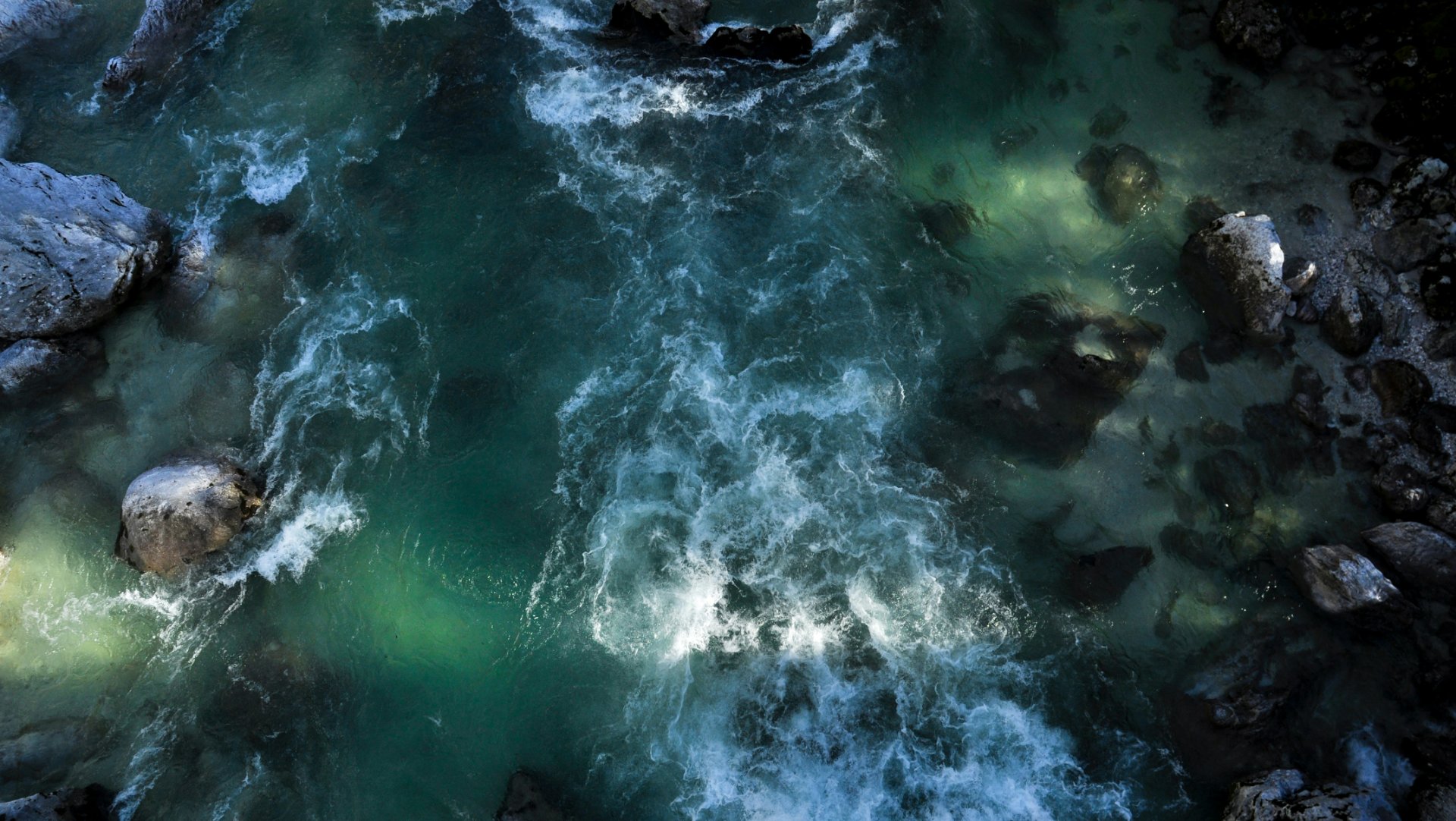
The emerald-green colour of the Soča — dissolved calcium carbonate from the Julian Alps limestone — provides cover that marble trout exploit. In gin-clear conditions, the largest fish are invisible in their lies until they move. Polarised glasses and local knowledge (a guide's knowledge, specifically) are the difference between fishing over marble trout and fishing over empty water.
The Soča: Global Stronghold
Emerald water flowing through Alpine limestone gorges — the most beautiful river in Europe, and the last best hope for Salmo marmoratus.
The Soča is not simply a good marble trout river. It is the river that the species depends on for survival. The emerald-green water — that extraordinary colour that photographs cannot quite capture — flows through the Julian Alps of western Slovenia with a clarity and beauty that stops you on the bank before you think about fishing. The gorges, the pools, the gravel runs between limestone walls: this is water that has been shaping itself and its inhabitants for geological time.
The tributaries matter as much as the main river. The Idrijca, flowing through a gentler valley, holds marble trout and grayling in pools that are more accessible than the Soča's gorges. The 2004 flash flood on the Idrijca devastated marble trout populations — a catastrophe that demonstrated how fragile a species restricted to a handful of rivers truly is. Recovery has been painstaking, supported by the EU LIFE GrayMarble project, hatchery supplementation from pure genetic stock, and the removal of introduced brown trout from key tributaries.
The Tolminka — small, steep, intimate — holds marble trout in tight pocket water that demands short casts and precise presentation. Fishing any of these rivers for marble trout is a privilege that carries an obligation. The permit system, the barbless-only rules, the mandatory catch and release: these exist because the fish cannot sustain harvest, and the angler who fishes here is a guest in a conservation project as much as a sporting enterprise.
Italian Waters: Trentino and Friuli
The Noce, the Sarca, the Tagliamento — marble trout range extends south of the Julian Alps into Italian Alpine rivers.
Northern Italian rivers of the Adriatic drainage hold marble trout populations that complement the Slovenian heartland. In Trentino-Alto Adige, the Noce (Val di Sole) and the Sarca (draining into Lake Garda) hold marble trout alongside brown trout and grayling. The Trentino Trofeo zones offer trophy-managed beats where catch and release with barbless hooks is mandatory.
In Friuli-Venezia Giulia, the rivers draining the Julian and Carnic Alps share ecological character with the Slovenian side of the border — the political boundary is artificial in biological terms. The Tagliamento, one of the last semi-wild braided rivers in Europe, holds marble trout in challenging, spectacular water. The Torre and Natisone, close to the Slovenian border, complete the Italian range.
Access in Italy is managed through local fishing clubs (associazioni di pesca) and provincial permit systems. Regulations are strict on trophy waters — barbless hooks, no-kill, specific method restrictions. Guide services are less developed than in Slovenia but local knowledge through the clubs is excellent.
Streamer Fishing: Targeting the Predators
Large streamers fished slow and deep through the pools. The method is closer to salmon fishing than trout fishing.
Streamer fishing for marble trout above three to four pounds is a specific discipline. The flies are large — ten to fifteen centimetres — on size four to eight hooks. White, tan, and olive zonkers, articulated sculpin patterns, and large marabou streamers. Soča guides favour white and tan zonkers that imitate the minnows and sculpin that large marble trout feed on.
The method: heavy sinking tips or fast-sinking lines to reach the bottom of deep pools and undercut banks. The retrieve is slow and deliberate — long strips with extended pauses, not the fast stripping of reservoir lure fishing. The marble trout's ambush instinct is triggered by a fly that drifts into its territory and holds there. The take, when it comes, is a solid grab — the fish hits with the authority of a predator committed to the kill.
Fish the deep pools, the undercut limestone ledges, and the tail currents where minnow shoals funnel between structure. Dawn and dusk are the prime windows for streamer fishing — the low light gives large marble trout the confidence to move from their deepest lies. A seven or eight weight rod provides the backbone for casting heavy flies and controlling large fish in strong current.
Nymphing: Numbers and Access
Heavy Euro nymph rigs through the runs catch marble trout of one to three pounds — the same methods that work for brown trout and grayling.
Nymph fishing catches more marble trout than streamers in terms of numbers, particularly fish in the one-to-three-pound range that are still feeding primarily on invertebrates. The method is standard Alpine Euro nymphing: heavy tungsten-bead nymphs (Perdigon stonefly, Czech shrimp, hare's ear) on a ten-and-a-half to eleven-foot three-weight rod with an eighteen-to-twenty-foot leader.
Fish the gravel runs between deep pools, the heads of riffles, and the current seams where invertebrates concentrate. Post-spate is the prime window for nymphing marble trout — dislodged stonefly nymphs and caddis larvae tumble through the system, and even larger fish move into feeding positions to intercept them. The take on the nymph is often firm — marble trout, even small ones, strike with more authority than brown trout of the same size.
The Companion Species: Adriatic Grayling
The Soča holds both marble trout and Adriatic grayling — a distinct species, often caught in the same session, facing the same threats.
The Soča system holds a second treasure alongside the marble trout: Adriatic grayling (Thymallus aeliani), a species distinct from the common grayling of northern European rivers. They share the same water, face the same conservation challenges, and are often caught in the same session — a marble trout from the deep pool, a grayling from the tail-out below.
The Adriatic grayling is larger on average than many northern grayling populations, holding in the classic grayling lies: smooth runs, tail-outs, and glides over clean gravel. Euro nymphing and dry fly both produce, and the fishing is a natural complement to the marble trout fishing that brings anglers to Slovenia. The LIFE GrayMarble project addresses both species — the conservation of the Soča system is a package, not a single-species effort.
Conservation: The Fight for Genetic Purity
Critically endangered. Hybridisation with brown trout erased ninety per cent of historic genetic integrity. What remains is irreplaceable.
The conservation status of marble trout is the most urgent of any European salmonid. Introduced brown trout — stocked into Adriatic rivers throughout the twentieth century — hybridise freely with marble trout, producing fertile offspring that dilute the genetic integrity of both species. Ninety per cent of historic marble trout genetic purity has been lost through hybridisation. What remains is concentrated in a handful of headwater populations, principally in the Soča system and isolated Italian tributaries.
The EU LIFE projects — including LIFE GrayMarble in the Dora Baltea catchment and earlier initiatives in the Soča — work to eradicate non-native brown trout from key tributaries, maintain genetically pure broodstock, and supplement depleted populations. The work is painstaking: electro-fishing to remove invasives, DNA testing to confirm genetic purity, hatchery rearing of pure-strain juveniles for release. Dams fragment habitat and block migration between populations. Climate change threatens the cold headwaters that marble trout require.
The angler's role is straightforward. Catch and release, always, with barbless hooks. Handle with wet hands and revive thoroughly — marble trout have large gill surfaces and need extended recovery in strong current. No photographs out of water. Support pure-water protection by fishing only on permitted beats and respecting the regulations that exist to protect the species. A five-pound marble trout on the Soča is one of European fly fishing's greatest achievements. It is also one of its greatest responsibilities.
When to Fish: Conditions and Timing
Eight to fifteen degrees, off-colour water, dawn and dusk. The streamer window is narrow. The nymph window is wider.
Optimal conditions for marble trout: water temperature eight to fifteen degrees, with the best streamer fishing at the lower end of that range when the water carries a slight colour from snowmelt or recent rain. Off-colour water gives large fish the confidence to leave their deepest lies, and the streamer becomes visible without being inspectable. In gin-clear conditions, the largest marble trout are almost impossible to approach.
Season: May through October on most Soča beats, though the prime streamer fishing concentrates in May to June (post-snowmelt) and September to October (autumn rains). Mid-summer (July–August) can be too clear and warm in the lower sections. Nymph fishing is productive throughout the season.
Dawn and dusk are the windows for large fish on the streamer. Midday nymphing catches smaller marble trout in the runs between pools. Plan the day accordingly: streamer at first light through the deep pools, switch to nymphs as the sun reaches the water, return to the streamer at dusk.
Tackle: Two Rods, Two Methods
A seven-weight for streamers, a three-weight for nymphs. The fish demand both.
Streamer rod: nine feet, seven or eight weight. Sinking tip or fast-sinking line to reach the bottom of deep pools. Strong leader — nought-X to two-X fluorocarbon. The flies are large and heavy, the fish are powerful, and the current is fast. This is not delicate tackle.
Nymph rod: ten-and-a-half to eleven feet, three weight. Euro nymph setup with an eighteen-to-twenty-foot leader and sighter section. Tungsten-bead nymphs in sizes twelve to sixteen. This covers the smaller marble trout and the grayling that share the water.
Barbless hooks are mandatory on all Slovenian trophy beats and should be standard on all marble trout water. A rubber-mesh landing net with a long handle — the Soča's banks are steep in places, and reaching a fish in the current from a high bank requires reach. Polarised glasses in amber or copper tint for the emerald-green water.
Your Marble Trout Day
Dawn streamers through the deep pools. Midday nymphs in the runs. Dusk streamers again. The guide knows the water. Trust the knowledge.
Dawn: arrive at the beat with the guide. Rig the streamer rod — sinking tip, white or tan zonker. Fish the deep pools and undercut banks in the low light, working each pool methodically from head to tail. Slow strips, long pauses. The take, if it comes, will be in the first ninety minutes.
Mid-morning: switch to the nymph rod. Fish the gravel runs and current seams between the major pools. Marble trout of one to three pounds, plus grayling, in the faster water. Standard Euro nymphing — heavy point fly, lighter droppers, sighter tracking.
Afternoon: rest and observe. The guide will know which pools to return to at dusk — the lies where large fish have shown on previous visits. Rig the streamer rod again.
Dusk: the second and often best streamer window. As the light drops, the largest marble trout move from their deepest lies to feeding positions. Fish the same pools as the morning, but with more patience — the evening fish are often the biggest.
A day on the Soča may produce one marble trout or it may produce none. The fishing is not about numbers. A genuine five-pound marmoratus, taken on a streamer in the emerald water of the Julian Alps, is a fish that stays with you. Handle it with the care its rarity demands, and let it go.