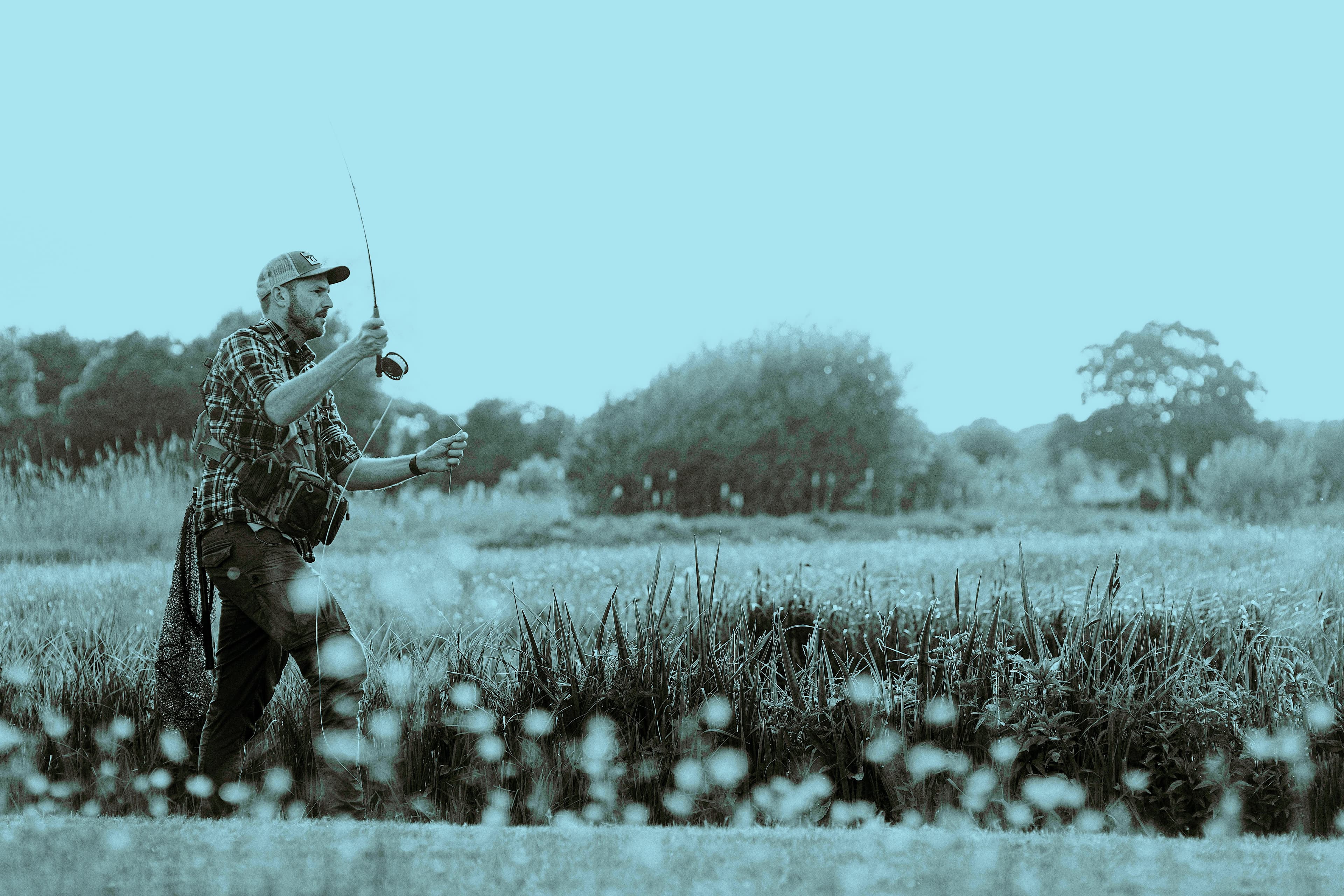
Chalkstream DNA: Visible Water, Invisible Margins
Gin-clear, spring-fed, and utterly unforgiving — these are not rivers so much as surgical theatres where one sloppy cast ends your morning.
Chalkstreams are liquid time capsules. The Test, the Itchen, the Anton, the Kennet, the Hampshire Avon, the Wensum — spring-fed rivers that rise from underground aquifers and flow with a constancy that borders on the geological. The water temperature holds between ten and twelve degrees year-round. The pH sits at seven and a half to eight and a half. Turbidity is near zero. You can count the spots on a trout's flank at fifteen feet, and the trout can count you at fifty.
This clarity is both the gift and the curse. Lush weed beds — starwort, ranunculus — thread the current into gutters and corridors, and the trout hold in the seams where food concentrates. The insect life is predictable, almost clockwork: upright olives in spring, caenis in summer, blue-winged olives through autumn. The conveyor belt delivers food to fish that rarely need to move more than a body length to intercept it. Your job, distilled to its essence, is to identify the insect, match it, deliver it upstream with zero drag, and do all of this without the fish knowing you exist.
Nothing about chalkstream fishing is forgiving. The water shows everything — a bad cast, a heavy landing, a fly that drags for a fraction of a second. But crack the code, and you will sight-fish wild brown trout with a precision that feels less like angling and more like a conversation conducted entirely in the language of current and insect wing.
Halford and Skues: The Great Schism
The greatest argument in the history of fly fishing — and both sides were mostly right.
No account of chalkstream fishing is complete without the argument, and the argument is glorious. Frederick Halford, writing from the 1880s onwards, codified the doctrine of the upstream dry fly with the fervour of a man who had found religion in a floating dun. His gospel was simple and absolute: cast upstream, fish dry, match the hatch exactly, and regard anything else as morally suspect. Halford gave chalkstream fishing its precision, its discipline, and — unfortunately — its snobbery. By 1910, dry fly had become chalkstream law, and wet fly was for the lower classes.
G.E.M. Skues, a solicitor by trade and a heretic by temperament, observed that trout spend the majority of their feeding time eating below the surface. His stomach autopsies proved what any observant angler could see: fish gorge on nymphs even during a hatch. His method — the induced take, a nymph swung upstream past a sighted fish — was elegant, effective, and scandalous. The Halfordians called it "creeping." Skues was blackballed from clubs. The debate raged for decades and reportedly produced something close to a riot at the Flyfishers' Club in 1938.
The modern view, arrived at with the benefit of a century of hindsight and rather less ideology, is that both were right about what mattered — upstream presentation to sighted fish — and both were wrong about excluding the other method. Stomach samples consistently show that trout feed sixty to eighty per cent subsurface even during a hatch. Halford's dry fly remains supreme when fish are on the dun. Skues's nymph is essential when they are not. The sensible chalkstream angler carries both and lets the trout decide. The argument, however, continues in pubs to this day, which is probably as it should be.
Reading Chalkstream Trout: The Five Lies
One lie feeds a trout all day. Your task is to identify it from thirty feet away without being seen.
Chalkstream trout do not move far. A single feeding lie, positioned in a current seam that delivers food, can sustain a fish for an entire season. Learning to read these lies is the foundation of everything that follows.
The feeding lane: a current seam between weed beds delivers a steady line of duns or nymphs. The trout faces upstream, fin tips visible in the clear water, rising at regular intervals. This is the classic chalkstream fish — sighted, feeding, catchable if the approach is correct.
The glide riser: a fish holding mid-channel in slow, flat water, sipping caenis or spent spinners from the film. Pure dry-fly water. The challenge is drag — every micro-current between you and the fish will pull the fly off line. Long leaders, reach casts, and nerve.
The weed gutter: a trout nymphing in a channel between weed beds, tail tip tipping up as it intercepts sub-surface food. This is Skues territory. An upstream nymph, dead-drifted or gently induced, presented into the gutter two feet ahead of the fish.
The dead-slow tail: a large fish — often a male — holding in the slow water at the pool tail, rising sporadically and unpredictably. Extreme stealth, fine tippet, and patterns down to size twenty. These fish have seen everything and refuse most of it.
The gravel patch: a fish on clean gravel in spring. This is a spawner. Leave it alone. Walk past, fish elsewhere, and be grateful the river still produces wild trout.
In all cases: polarised glasses and thirty feet of distance. A chalkstream trout's vision cone extends roughly two feet ahead and above. Stay behind it, stay low, and approach from downstream.
Spring: The Olive Uprising
March through May — upright olives on the surface, nymphs in the gutters, and the river remembering what it is for.
Spring on a chalkstream is when the whole enterprise makes sense. The large dark olives arrive in March, the medium olives follow, and by April the river is producing hatches with the regularity that Halford built his entire philosophy around. Fish that have spent the winter deep and dormant begin to show in the feeding lanes, rising to duns with an enthusiasm that will not survive the summer's education.
Dry fly: a pale watery olive or medium olive pattern on a size sixteen or eighteen. Leaders of eighteen to twenty feet — the gin-clear water demands distance between fly line and fly. The reach cast, placing the fly upstream with slack leader that drifts without drag, is the essential presentation. Mend before drag begins, not after — once the fly pulls, the fish is done with you.
Nymphing: a gold-ribbed hare's ear on a size fourteen, fished upstream through the weed gutters where trout intercept ascending nymphs. Watch for the take — a slight tilt of the body, a flash of white mouth, a pause in the drift of the leader. The induced take, Skues's great contribution, works here: cast the nymph two feet upstream of a sighted fish and allow the current to swing it into the trout's feeding lane with a gentle lift.
Summer: The Caenis Test
Size twenty-two to twenty-six, short casts, and the smallest flies on the finest tippet you own.
Summer on a chalkstream is dominated by caenis — tiny white-winged flies that hatch in clouds and drive anglers to the edge of reason. The fish feed on them selectively, sipping spent spinners from the surface film with a rhythm that looks easy to match and is not.
Dry fly: CDC caenis patterns on size twenty-two to twenty-six hooks. Seven-X tippet. Short casts — ten to fifteen feet — to minimise drag on the flat, slow glides where caenis feeding occurs. Every micro-current between rod tip and fly is an enemy. The leader must land with slack, and the fly must sit in the film without moving.
When the caenis hatch overwhelms (and it will — the fish become glutted and impossible), drop below the surface. Sight-nymph with a small quartz-bodied caddis or a micro-nymph drifted past rising fish. The take is visible: the fish tips, the white of the mouth flashes, and you lift. This is the most demanding fishing a chalkstream offers, and on the right day it is the most rewarding.
Autumn: Blue-Winged Olives and the Induced Take
The blue-winged olive brings the river back to life — and Skues's method comes into its own.
Autumn on a chalkstream has a quality of maturity about it. The frantic hatches of summer are past, the weed is thinning, and the water has a clarity that makes the spring look murky. The blue-winged olive — that dependable, generous insect — hatches from September through October and brings the trout up with the quiet confidence of a hatch they have been waiting for.
Dry fly: a BWO dun on a size sixteen or eighteen, hackle-point wings set upright, fished upstream on fine tippet. The fish are experienced now — summer has educated them — and the presentation must be exact. No drag, no splash, no shadow on the water.
The induced take reaches its peak in autumn. Skues's method: a snipe-and-purple spider or a sparse olive nymph on a size fourteen, cast two feet upstream of a sighted fish and allowed to swing gently into the feeding lane with a controlled lift of the rod tip. The fish sees the nymph accelerate — as a natural would when ascending to hatch — and intercepts it. The take is a deliberate turn and close. Lift into it. This is chalkstream fishing at its most refined, and the lineage runs directly back to Skues on the Itchen a century ago.
The Weed Game: Chalkstream Chess
Summer blanket weed forces trout into narrow channels. Reading the weed is reading the river.
By mid-summer, weed growth on a chalkstream reaches its peak, and the river transforms. What was open water in April is now a maze of ranunculus beds, starwort channels, and floating weed rafts. The trout retreat into the gutters and corridors between the weed, and the fishing becomes a game of geometry.
Left-to-right gutters: cast to the head of the channel and mend immediately — the current differential between the weed-free gutter and the slower water over the weed will drag the fly within seconds. Right-angle gutters where current bends around a weed bed: short, precise casts with minimal line on the water. Weed-raft drifts: floating mats of cut weed create dead spots downstream where trout lie and intercept food tumbling over the obstruction. Fish the gutter behind the raft.
Watch the weed tips where they break the surface. Trout feed in the "window" of clear water directly upstream of a weed bed, where the current funnels food into a concentrated lane. The fish's feeding position is predictable — it will be tight to the upstream edge of the weed, facing into the flow, and it will not tolerate a fly that arrives from any angle other than directly upstream.
Tackle: Stealth Is Non-Negotiable
An eight-foot four-weight, twenty-foot leaders, seven-X tippet — and the discipline to use them properly.
Rod: eight to nine feet, rated four or five weight. Delicacy matters more than distance on a chalkstream — the average cast is fifteen to twenty-five feet, and the rod's job is to place the fly with precision, not to launch it into the next county. An eleven-foot six-weight earns its place on windy days or when fishing the wider beats of the lower Test, but it is not the primary tool.
Line: a modern floss-core floating line that sits high and casts cleanly at short range. Leaders of twenty feet minimum — on flat water in summer, longer. The leader is the most important piece of tackle on a chalkstream. It must turn over cleanly, land without disturbance, and present the fly with enough slack to drift without drag. Tippet: seven-X fluorocarbon in summer, six-X in spring and autumn. Fine tippet is not optional. It is the price of admission.
Net: compact, carried on the back or belt. Barbless hooks are mandatory on most chalkstream beats and should be standard practice on all of them. The fish are wild, the water is precious, and every trout returned in good condition is a trout that will rise to someone else's fly next week.
Etiquette and Access
Private beats, strict rules, and day tickets that cost more than dinner — but the fishing earns every penny.
Chalkstream access is the most contentious issue in English fly fishing, and it is not likely to be resolved over a cup of tea. The Test is ninety per cent privately owned. The Itchen is similar. Day tickets, where they exist, run to a hundred pounds or more, and the waiting lists for syndicate membership can outlast a mortgage. This is not ideal, and the debate about access reform is real and important.
What is also real: the fishing is extraordinary, and the private management has, for all its exclusivity, maintained water quality and habitat that public waters have often lost. The rules — upstream dry only on some beats, no wading, silent approach, catch and release on wild fish — exist because the water demands them. A chalkstream cannot absorb careless fishing the way a big reservoir can. The etiquette is not pretension. It is conservation wearing a tweed jacket.
For the visiting angler: book through an established agent, arrive early, listen to the keeper, and fish within the rules of the beat. Carry polarised glasses, a low profile, and the patience to watch before you cast. The river will show you its fish if you give it time. Rush it and you will see nothing but your own reflection.
Beyond the Dogma: Modern Chalkstream Reality
Hatch decline, abstraction, climate change — and the quiet revolution of Euro nymphing on hallowed water.
The chalkstreams face pressures that neither Halford nor Skues could have imagined. Water abstraction lowers flows and concentrates pollution. Agricultural run-off degrades the invertebrate life that the entire food chain depends on. Caenis numbers have declined significantly since the 1990s. Climate change is shifting hatch timing and pushing water temperatures towards the upper edge of trout comfort. The rivers that inspired modern fly fishing are, in some reaches, in genuine trouble.
The fishing has adapted. Nymphing now accounts for the majority of fish caught on most chalkstream beats — not because the tradition has failed, but because the hatches are thinner and the trout feed subsurface more than they once did. Euro nymphing, with its long leaders and pink sighters, has arrived on hallowed water and outfishes the Halfordian dry fly on days when nothing is hatching. This scandalises some. It would have delighted Skues.
Modern tackle — fluorocarbon tippet, floss-core lines, seven-X that Halford could not have dreamed of — makes both methods more effective than they were a century ago. The fish eat what is in front of them. Match it, present it upstream, do it stealthily, and the chalkstream yields. The dogma was always less important than the observation. Halford knew that, even if his followers forgot it. Skues certainly knew it. The river has always known it.
Your Chalkstream Day
Dawn nymphs, midday dries, evening induced takes — the rhythm that the river teaches if you listen.
Dawn: arrive at the water before the hatch begins. Walk the beat slowly with polarised glasses, noting fish positions. The trout that are visible now, holding in their lies before the first insects appear, are the fish you will target all day. Do not cast yet. Watch.
First hour: upstream nymph through the weed gutters and along the current seams. A gold-ribbed hare's ear or a pheasant tail on a size sixteen, drifted past sighted fish or searched through likely water. The pre-hatch period is when the nymph is most effective — the fish are feeding subsurface, and nothing on top competes for their attention.
Midday: when the hatch begins — olives in spring, caenis in summer, blue-winged olives in autumn — switch to the dry fly. Fish upstream to rising trout, matching the size and silhouette of the natural. This is the heart of chalkstream fishing, the window that Halford built his philosophy around, and it remains the finest dry-fly fishing in the world.
Evening: the hatch thins, the spent spinners drift downstream, and the trout that refused the dry begin to show again — rising subtly, often to nymphs ascending in the fading light. The induced take: a sparse nymph, swung gently into the feeding lane with a lift. Skues's method for Skues's hour. The light drops, the river quiets, and the last fish of the day is often the best.